
Today

Product portfolio enlargement, maintenance of high quality and future trends are directly related to the used techniques and machinery base. Therefore, at the enterprise there carried out planned activities in the field of technological innovations and re-equipment of machinery base.
Lately, a number of high accuracy modern machines made by leading western and domestic manufacturers have been put into operation: seven machine centers, gear processing machines, coordinate boring machines and circular face-grinding machines so as pressure die castings machines. Great attention is paid to the machine building on our own for which the investments grew four times. The development and manufacturing of machines on our own is being applied most of all in order to enhance the capacities of the existing production and introduction of new products. There are operated the following machinery: band saws intended for topping, special milling machines and broaches, test desks, multiple-head milling, thread-cutting, diamond boring machines.
In the 21st century one could hardly imagine a successful industrial enterprise which doesn’t use information technologies to ensure its activities. Competitive environment impels a quick and precise decision-making based on the structured true information. Therefore, at the enterprise, there was implemented the standard for manufacturing management MRPII, carried out on the basis of system - BaanERP.
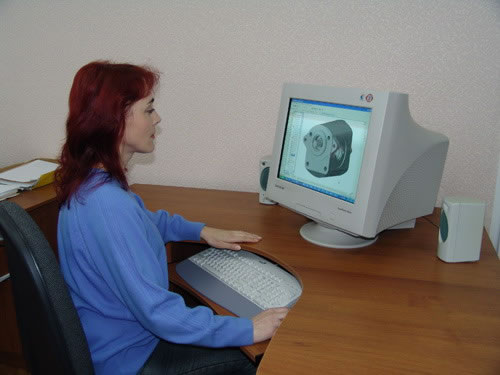
The BaanERP system is one of world leaders in the sphere of the complex automation of industrial enterprises. The system successfully functions at such industrial world leaders as Boeing, FIAT, Mercedes, Marconi, Komatsu, Śkoda, Volkswagen, Volvo, Hyundai, KAMAZ, BELAZ, URALAZ and others.
Since 2003, the business processes are in commercial operation, whereby all necessary functions of production management have being optimized and standardized: maintenance in actual state of the information about product design, manufactured and purchased components; operating-routing sequence of production, material consumption rates, production facilities data; planning of finished products manufacturing; planning of the manufacture of components, units and subunits; purchase planning; load planning of facility and manpower; monitoring of contracts and purchase orders; management of shipments; monitoring of storage and the non-finished production level; on-line control of assembly and storage production; control of internal logistics; keeping of inventory records; planning and keeping records of utilization of electrical energy; calculation, modelling and analysis of prime cost.
Using ERP-system as a strong instrument enables the enterprise to fulfill deliveries of finished products to consumers exactly and on time, quickly meet the changing demand for products so as maintain optimal prices of products on sales.